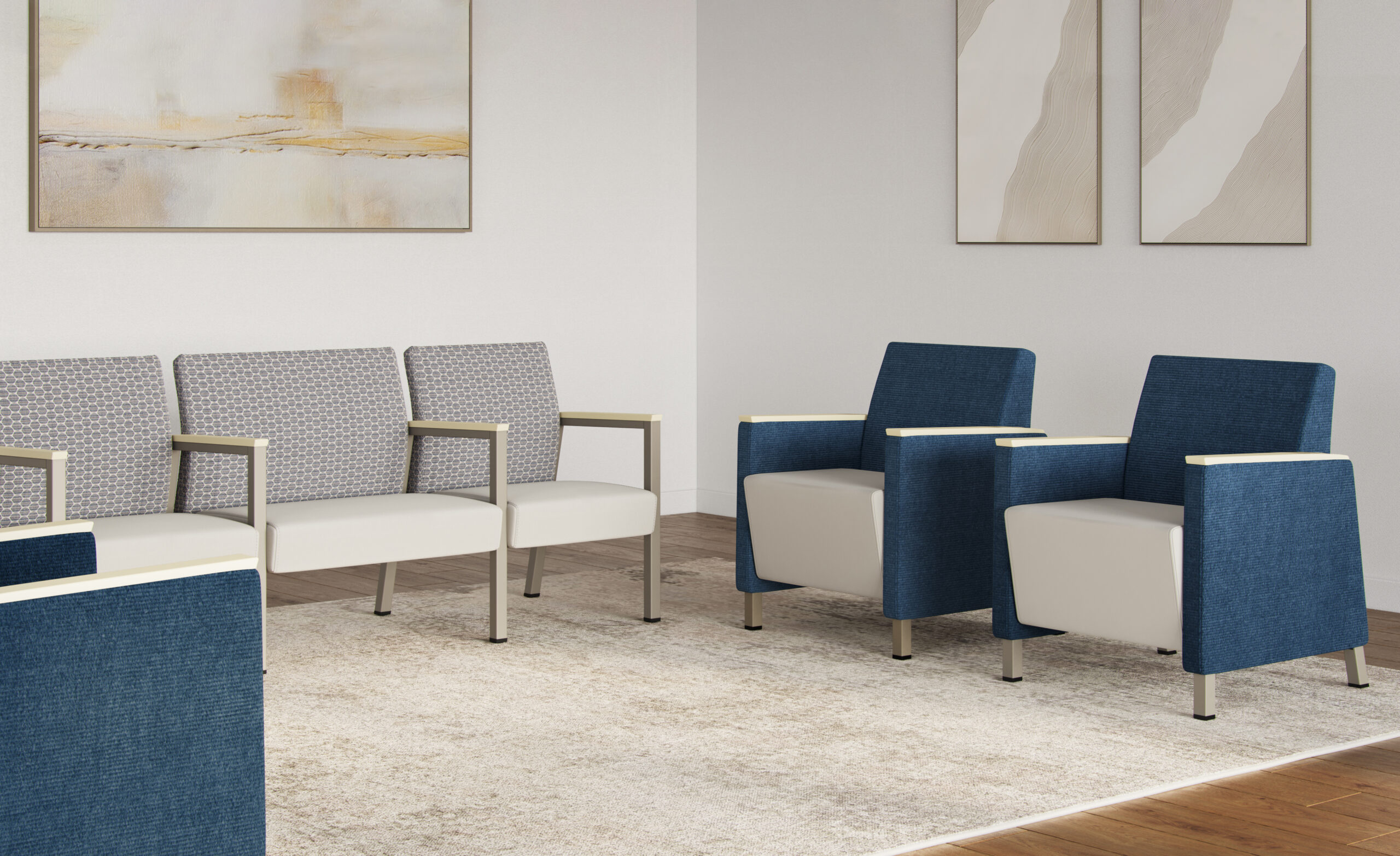
Healthcare environments are among the most complex spaces to plan and design. Hospitals, medical offices, and outpatient clinics must support patient care, staff efficiency, operational flow, durability, and strict regulatory requirements, all within the same environment.
This is why healthcare interior planning goes far beyond aesthetics. Every planning decision influences how a facility operates daily and how patients and caregivers experience the space.
Supporting Clinical Workflow
One of the primary goals of healthcare interior planning and design is to support clinical workflow. Physicians, nurses, and medical staff move through environments quickly throughout the day, interacting with equipment, workstations, patient rooms, and support areas.
When spaces are poorly planned, inefficiencies appear immediately, storage may be inconvenient, work areas too small, circulation blocked, or furniture may interfere with equipment access. Over time, these small issues create operational friction.
Thoughtful interior planning considers movement patterns, spatial relationships, and proximity between tasks, helping healthcare teams work more efficiently and comfortably.
Strategic interior planning helps healthcare organizations move beyond individual projects and build environments that remain functional, adaptable, and consistent over time.
Enhancing Patient Experience
The physical environment plays a major role in shaping the patient experience. Healthcare spaces can feel overwhelming or stressful, especially for individuals navigating unfamiliar medical environments.
Through patient-centered healthcare design, interior planning can help create spaces that feel calm, organized, and welcoming. Comfortable seating, intuitive layouts, and thoughtfully designed waiting areas contribute to environments that support both comfort and confidence in care.
While patients may not notice every design decision, they experience the impact of well-planned environments immediately.
Durability and Infection Control
Healthcare environments operate continuously, often twenty-four hours a day. This makes durable healthcare interiors essential. Furniture, surfaces, and interior materials must withstand constant use, frequent cleaning, and rigorous disinfecting protocols.
Interior planning must account for material performance, cleanability, and long-term maintenance. Seamless surfaces, nonporous materials, and easily cleanable furniture systems help healthcare facilities maintain safety while extending the life of interior products.
These considerations are critical in environments where cleanliness and infection control are priorities.
Planning for Long-Term Performance
Healthcare organizations often manage multiple facilities and ongoing capital projects. Structured healthcare interior planning strategies help create consistency across locations while supporting future renovations and expansions.
By aligning interior planning with operational needs, furniture standards, and procurement strategies, organizations can create environments that remain functional and adaptable over time.
At Saevoya, healthcare interior planning focuses on aligning design intent, operational performance, and long-term durability. The goal is to create environments that support caregivers, enhance patient experience, and perform reliably for years to come.